Leaf season in Mint Hill asks a practical question: should fallen leaves be mulched into the lawn with the mower, or collected and removed? Both answers are right, depending on volume, tree type, and timing. A light fall of dry leaves can feed the soil. A deep mat of wet oak leaves can smother fescue, block fall overseeding, and keep the surface damp enough to invite disease. The checklist below helps you decide week by week instead of choosing one method for the whole season.
Fescue makes the timing sharper. Fall is when fescue grows and when new seed needs light. Leaves left too long in October do more harm than the same leaves left briefly in December, when growth has slowed. Work the checklist from the top each week you see meaningful leaf cover.
Mulch-mow or remove: weekly leaf checklist
- Cover check: can you still see grass through the leaves? If yes, mulch-mowing is usually viable. If the lawn has disappeared, remove first.
- Volume check: after one mulching pass, are pieces small and settled into the turf? If a thick layer still sits on top, bag or remove the excess.
- Moisture check: are leaves dry enough to shatter rather than clump? Wet matted leaves should be removed or dried before mulching.
- Seed check: did you overseed this fall? New seedlings need light, so keep cover thin and frequent until they are established.
- Tree check: large tough leaves that break down slowly need more passes and may still need partial removal.
- Bed check: are leaves piling against shrubs and in beds where they hold moisture at crowns? Clear those areas by hand even if you mulch the open lawn.
- Final check: by late season, is any area still matted? Remove remaining mats before winter so turf is not smothered under them for months.
Equipment and timing notes for leaf work
A mulching blade and a mower deck kept clear of buildup chop leaves far better than a dull standard blade pushing them around the yard. Work when leaves are dry, walk the lawn first for sticks and stones hidden under cover, and keep the discharge pointed away from beds you have just cleared. If you bag, alternate between mulching and collection through the season so the soil still receives some returned leaf matter. For larger properties, staged work starting under the heaviest trees keeps paths and driveways usable and prevents a single overwhelming cleanup weekend late in November, when leaves are wettest and hardest to move.
How mulch-mowing helps when it works
A mulching mower chops leaves into small pieces that fall between grass blades. Soil organisms then work those pieces down, returning organic matter. Studies of municipal leaf mulching have repeatedly found that moderate leaf mulch does not harm turf and can improve soil over time. The key word is moderate. Pieces must be small enough to settle in, not form a blanket. Dry leaves mulch far better than wet ones, and frequent light passes beat one heroic pass at the end of the season. If you can still see grass after mowing and the pieces are dime sized or smaller, you are in the range that helps.
When removal is the honest answer
Remove leaves when the canopy is heavy, especially under multiple oaks, when rain has matted them, or when they cover new seed for more than a few days. Removal is also right in low corners where leaves collect against fences and stay wet. Collected leaves still have value as compost or as winter mulch in beds, away from turf. Many Mint Hill owners use a hybrid: mulch the early light falls, remove the peak drop, and mulch the tail end. Services such as Malibu Landscaping and Lawn Service plan cleanups the same way, matching the method to the week rather than selling one answer for the whole property.

Equipment and safety notes for leaf work
A mulching blade and a mower deck kept clear of buildup chop leaves far better than a dull standard blade pushing them around. Work when leaves are dry, walk the lawn first for sticks and stones hidden under cover, and keep the discharge pointed away from beds you have just cleared. If you bag, alternate between mulching and collection through the season so soil still receives some returned leaf matter. For large properties, staged work from the heaviest trees outward keeps paths and driveways usable and prevents a single overwhelming cleanup weekend late in November.
Common questions
Will mulched leaves make my soil too acidic?
Moderate leaf mulch has only a small, short lived effect on soil pH in most lawns. A soil test every few years tells you more than leaf type alone, and lime is only needed if the test calls for it.
How often should I mulch-mow during peak leaf fall?
Often enough that grass stays visible and pieces settle in, which can mean weekly or more under heavy trees. Waiting until every leaf is down usually creates a mat that must be removed instead.
Should leaves stay on flower beds over winter?
A loose layer can protect beds, but keep it away from plant crowns and remove matted leaves in spring. Turf is different: do not leave a mat on grass through winter.
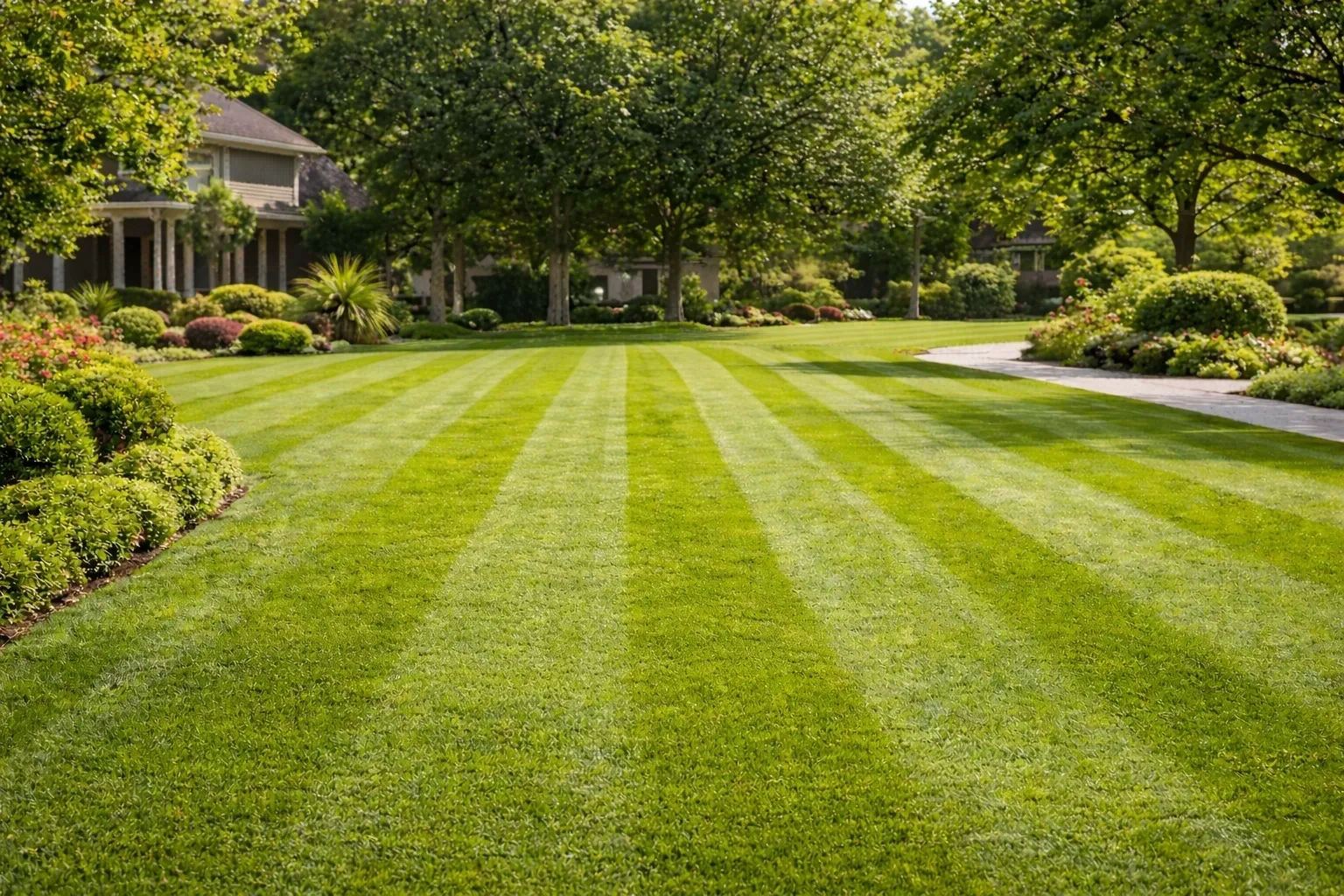
Photos in this guide are representative stock images.
← All guides from Malibu Landscaping and Lawn Service← Back to Malibu Landscaping and Lawn Service