The simplest lawn rule with the biggest effect in Mint Hill is the one-third rule: never remove more than one third of the grass blade in a single mowing. Cut a three inch lawn down to two inches and you have stressed it. Let it grow to six inches and then force it back to three and you have stressed it more, even though the final height sounds reasonable. The rule is about the size of the cut, not just the setting on the mower.
Taller fescue, managed this way, shades the soil, keeps roots cooler, and makes life harder for crabgrass. Scalped fescue does the opposite. This guide shows how to apply the rule at home, how to handle the weeks when rain or travel let the lawn get ahead of you, and where the professional line sits.
Why blade length and root depth travel together
Grass balances top growth and roots. When you remove a large share of the leaf, the plant pauses root growth while it rebuilds leaf area. Repeat that shock weekly and roots stay shallow, which means the lawn needs water more often and suffers sooner in a July dry spell. Taller leaf also shades the soil surface, slowing evaporation and keeping soil temperatures lower at the level where crabgrass seed germinates. For tall fescue in the Piedmont, a finished height around three to four inches through summer is common practice. Bermuda lawns are kept shorter, so know which grass you have before copying a neighbor's mower setting.
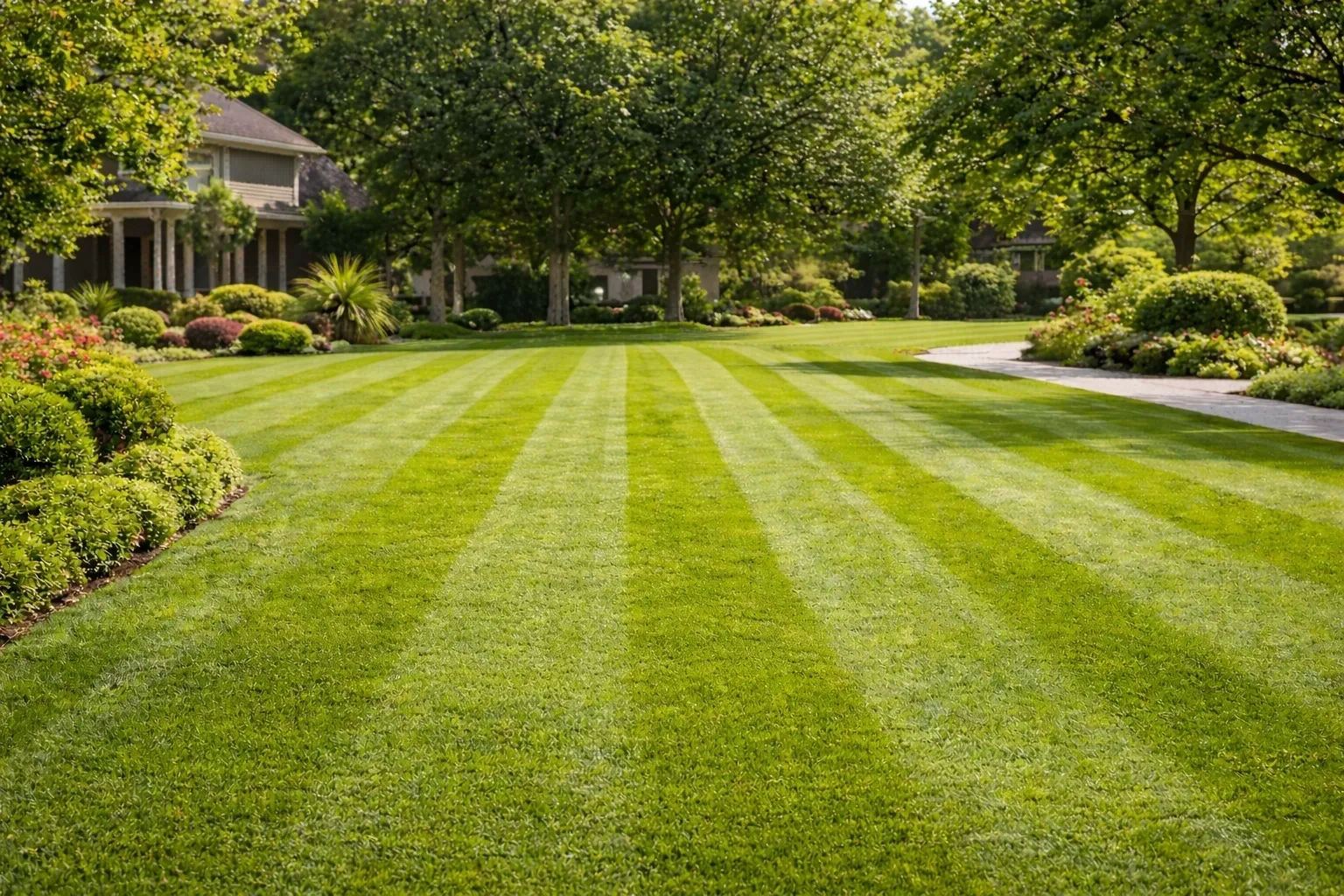
- Measure your current height. Push a ruler through the turf to the soil in a few spots after mowing. Guessing from the mower dial is unreliable because tire pressure and deck level shift the real cut.
- Set the target for your grass. For tall fescue, plan a finished height near three to four inches in summer. Multiply by one and a half to find the height at which you should mow next, so you never take more than a third.
- Mow on growth, not on the calendar. In fast spring growth that may mean every five days. In a dry summer stretch it may mean skipping a week. The calendar serves the rule, not the other way around.
- Handle an overgrown lawn in stages. If the grass reached six inches and your target is three, raise the deck, cut to about four, wait a few days, then cut again. One severe cut scalps and shocks the plant.
- Keep blades sharp and vary the pattern. A dull blade tears leaf tips, leaving brown edges and open tissue. Changing direction reduces ruts and helps grass stand upright for an even cut.
- Leave clippings unless they clump. Short clippings return nitrogen and shade to the soil as they break down. Heavy wet clumps should be spread or collected because they smother the grass beneath them.
Scalping, edges, and the trimmer problem
Most scalping in suburban lawns happens at edges. A string trimmer held at a slight angle can cut a border to half an inch while the mower keeps the center at three inches, creating a brown frame and a warm strip where weeds start. Hold the trimmer level and match the mower height. The same applies under trees and along fences where operators hurry. If a strip consistently yellows first in summer, check its height before blaming fertilizer or disease. Crews such as Malibu Landscaping and Lawn Service train for this because edge height is the most common difference between a lawn that looks uniform and one that looks tired at the margins.
Height through the seasons
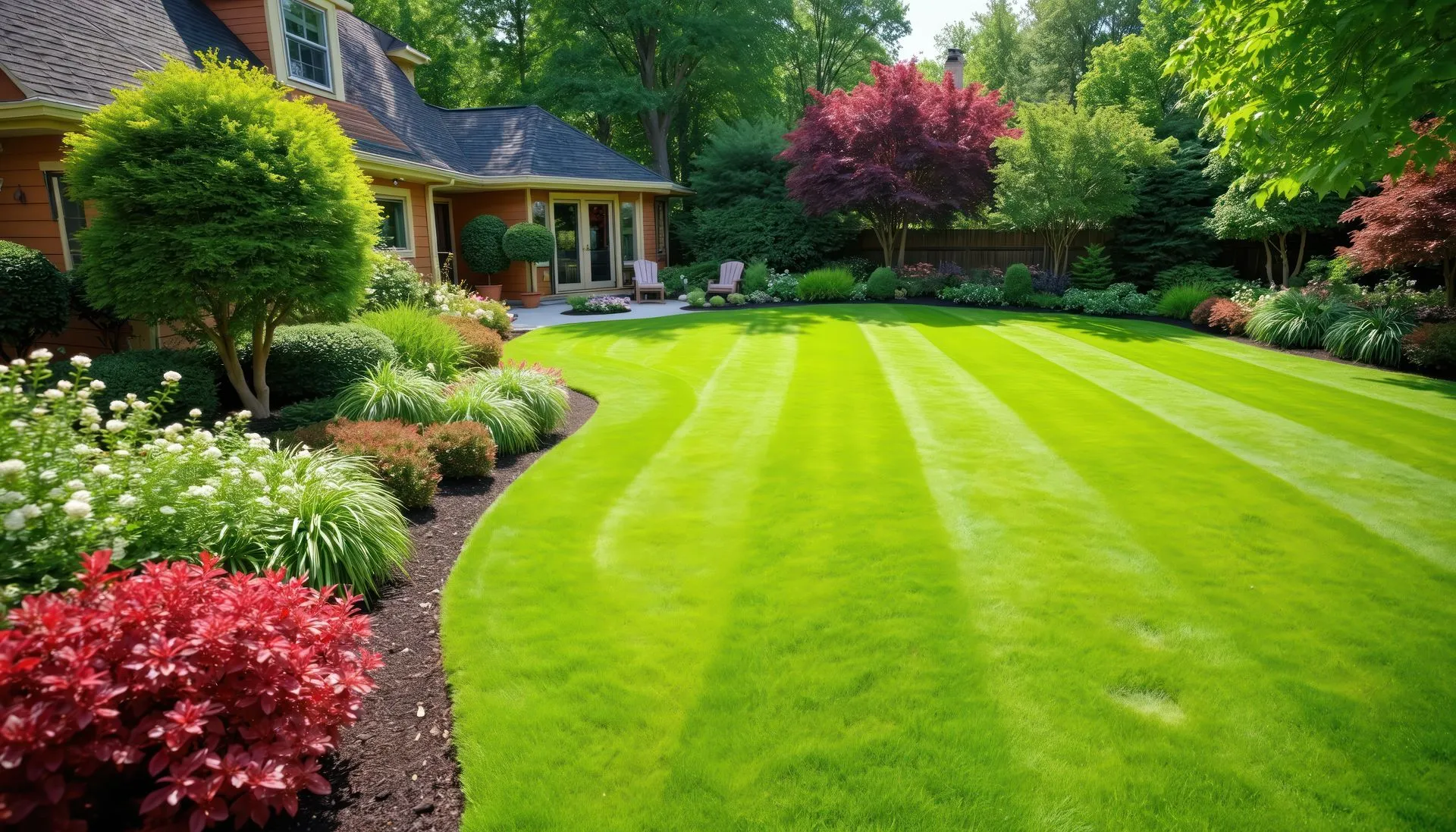
Fescue height is not one setting all year. You can mow a little lower in mild spring and fall growth, then raise the deck as summer heat builds, and lower it gradually again in fall before aeration and overseeding. Bermuda follows a different calendar, growing in summer and going dormant and tan in winter, so do not judge a Bermuda lawn by fescue rules. The one-third principle travels across both grasses and across seasons. Whenever growth speeds up after rain, shorten the interval between cuts. Whenever growth slows in drought, let the mower rest and let the taller canopy protect the roots below it through the hottest weeks.
When to hand it over
Do-it-yourself mowing works well when you can keep the schedule the grass sets. The professional line arrives when growth outruns your availability in spring, when a mower cannot be set or kept sharp, or when height problems are tangled with overseeding, aeration, and weed pressure that need coordinated timing. Whatever you decide, keep the rule. A lawn cut little and often at the right height needs less rescue work in every other category, from watering to weeds, across a Mint Hill summer.
Height through the seasons
Fescue height is not one setting all year. You can mow a little lower in mild spring and fall growth, then raise the deck as summer heat builds, and lower it gradually again in fall before aeration and overseeding. Bermuda follows the opposite calendar, growing in summer and going dormant and tan in winter, so do not judge a Bermuda lawn by fescue rules. The one-third principle travels across both grasses and across seasons. Whenever growth speeds up after rain, shorten the interval between cuts. Whenever growth slows in drought, let the mower rest and let the taller canopy protect the roots below it.
Common questions
What height should I keep tall fescue in summer?
Most tall fescue in this region does well finished around three to four inches in summer. The taller leaf shades soil, supports deeper roots, and reduces weed pressure.
My lawn got too long on vacation. Can I cut it all at once?
Better not to. Raise the deck and bring it down in two cuts a few days apart, following the one-third rule at each step to avoid scalping and shock.
Do clippings cause thatch?
Normal short clippings break down quickly and are not the main cause of thatch. Leaving them returns nutrients, as long as they are not left in heavy wet clumps.
Photos in this guide are representative stock images.
← All guides from Malibu Landscaping and Lawn Service← Back to Malibu Landscaping and Lawn Service